Self-Study vs Tutoring for OC: Which Actually Works Better?
A Question Worth Thinking About Carefully
Tutoring for the OC test is a large industry. Fees can range from $40 to $100+ per hour, and some centres run intensive programs costing thousands per year. The question is not whether tutoring helps — it can — but whether the marginal benefit over structured self-study justifies the cost for your family.
The honest answer varies by child and situation. Here is a clear breakdown.
What Tutoring Offers
Structure and Accountability
Scheduled lessons force regular study. Many children respond better to an external commitment than to parent-set homework. This alone can justify tutoring for families who struggle to maintain a home study routine.
Expert Feedback
A good tutor can identify subtle weaknesses quickly — a recurring misunderstanding, a flawed strategy, a confidence issue — that parents may not notice. This diagnostic value is often underrated.
Familiarity with Test Format
Experienced tutors have seen many students take the OC test and know the common question types, traps, and strategies. This insight is hard to replicate from generic study materials.
Peer Environment
Group tutoring places children with peers of similar ability. Seeing other students tackle the same questions can motivate and normalise the preparation process.
What Tutoring Does Not Fix
Lack of Daily Practice
One or two tutoring sessions per week is not enough. Students still need 4–5 days of independent practice. If your child won't do that independently, tutoring alone won't solve the preparation challenge.
Child Motivation
A tutor cannot make a child want to be there. Children dragged unwillingly to tutoring rarely benefit — and often build resentment that affects performance.
Systemic Issues
If your child has anxiety, poor sleep, or emotional barriers to testing, tutoring addresses none of these. Work on those foundational issues first.
What Self-Study Offers
Flexibility
You can adjust intensity to your child's energy, work around family schedules, and pause when needed. This is particularly valuable if your child is already under academic pressure from school.
Cost Efficiency
Quality practice platforms like AcePath cost a fraction of tutoring. A year of structured preparation via our practice packs typically costs less than a single month of weekly tutoring.
Parent Engagement
When you guide the preparation, you understand your child's strengths and weaknesses deeply. This knowledge helps you support them emotionally and advocate for them through the application process.
Independence and Ownership
Children who learn to study independently develop habits that benefit them for life. Year 4 is a formative age — self-directed learning here transfers to high school and beyond.
What Self-Study Requires
A Structured Plan
Random practice doesn't work. You need a week-by-week schedule that covers all three sections, builds from untimed to timed practice, and escalates appropriately.
Parent Time
Expect to spend 2–4 hours per week actively involved in your child's preparation — reviewing practice tests, discussing mistakes, and adjusting the plan. This is more demanding than simply paying for a tutor.
Quality Materials
Outdated or off-format practice material can actively hurt preparation. Since the OC test moved to a Cambridge-style format in 2025, older ACER-style materials are less useful. Use current, format-matched resources.
Discipline
Self-study requires consistency. Two weeks of good work followed by a week off doesn't build skill the way steady weekly practice does. Parent role is often to maintain the rhythm.
When Tutoring Is Worth It
- Your child responds poorly to parent-led study sessions but engages well with outside adults
- You don't have time for active involvement in preparation
- Your child has specific, persistent weaknesses that need expert diagnosis
- You want a peer study environment
- Preparation at home leads to regular conflict — tutoring removes that dynamic
When Self-Study Works Better
- Your child is self-motivated and comfortable studying independently
- You or another family member can guide the process
- Cost matters — good self-study materials deliver most of the same learning value
- Your child has a packed schedule and cannot add another scheduled activity
- You want full control over the pace and intensity of preparation
A Hybrid Option
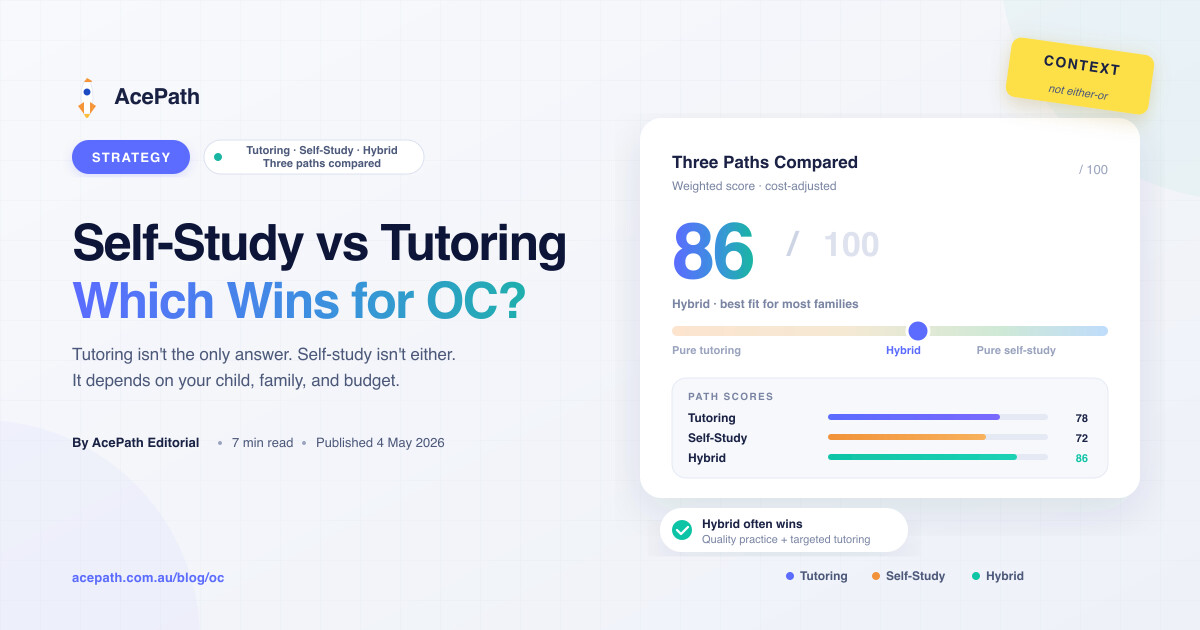
Many families get the best results from a hybrid approach:
- Self-study as the foundation — structured weekly practice via quality materials
- Occasional tutoring — monthly or bi-weekly sessions focused on specific weaknesses, or during final exam preparation
- Group workshops — targeted short-term group classes on specific skills like Thinking Skills
This keeps costs down while accessing expert input where it adds the most value.
Questions to Ask Before Deciding
- Can my child study effectively with me or alone for 3–5 days per week?
- Do I have the time to structure and guide preparation?
- Is cost a significant factor in this decision?
- Does my child respond better to external authority or self-direction?
- Are there specific weak areas I cannot diagnose or support?
Whichever Path You Choose, Start With Quality Practice
Whether you go with tutoring, self-study, or a hybrid, your child needs regular practice with current-format OC questions. A free AcePath sample quiz gives you a baseline, and our structured practice packs provide the foundation for either approach.
Many tutors actually assign platforms like AcePath as homework between sessions — combining expert guidance with high-quality independent practice is often the strongest preparation model.
Start Practising Today
Try a free sample quiz to experience AcePath's exam-style practice tests.
Try Sample Quiz Register Free